Results for “conceptart”

15 prompts

Chloe H.@chloe_h · Sep 19 · GPT-Image
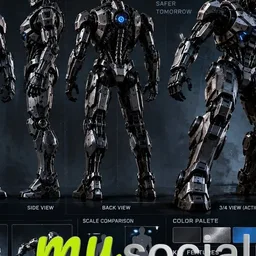
Cinematic Robot Security Hunter Character Sheet

This image reads like a leaked production document: a near-black armored robot named UNIT-77, blue optics glowing behind a faceless visor, presented on a dark board with a full-body front, side, back and 3/4 view lined up across the top. Below it sit six action poses, close-up panels for head, chest, hand and material texture, a color palette strip, a scale comparison against a human figure, and a neon city where this machine would patrol. The whole thing feels cold, engineered and quietly cinematic.

The prompt works because of three deliberate moves. The reference lock paragraph tells the model to preserve faces, outfits and materials exactly, so the character never drifts between panels. The numbered shot list front, side, back, 3/4, action poses, detail crops forces a disciplined grid instead of one hero image. And the concept art styling cues (dark cinematic background, premium studio lighting, technical design lines, clean typography) create the cinematic lighting and documentary credibility that make it look like a real design bible.

To remix it, keep the panel structure but change the subject: upload a fantasy warrior, a creature or a fashion model and let the adaptation paragraph handle the shift. Warm the palette and background for a softer editorial mood, or drop a few detail panels to give the remaining views more room and export at 3:2 or 4:5 if the sheet is heading to a social feed rather than a wide board.

Create a premium, ultra-realistic cinematic CHARACTER SHEET using the PROVIDED CHARACTER REFERENCE IMAGE.

REFERENCE LOCK:
Use the uploaded image as the exact identity and design reference. Preserve the character’s facial features, body structure, hairstyle, outfit, colors, materials, and recognizable identity with maximum accuracy. Do not redesign or replace the character.

CHARACTER SHEET LAYOUT:
Create a professional Hollywood / Netflix-style production character sheet similar to a high-end sci-fi film design document.

Include:

1. FULL-BODY FRONT VIEW
2. FULL-BODY SIDE VIEW
3. FULL-BODY BACK VIEW
4. 3/4 VIEW / ACTION POSE
5. 4–6 DYNAMIC ACTION POSES
6. CLOSE-UP HEAD DETAIL
7. CHEST / BODY DETAIL
8. HAND / ACCESSORY DETAIL
9. FOOTWEAR / LOWER BODY DETAIL
10. MATERIAL & TEXTURE CLOSE-UPS
11. COLOR PALETTE
12. SCALE COMPARISON (IF APPLICABLE)
13. ENVIRONMENT CONTEXT IMAGE
14. KEY CHARACTER FEATURES

LAYOUT & DESIGN:
Professional character concept art presentation board.
Dark cinematic background, premium studio lighting, technical design lines, organized reference panels, clean typography, realistic proportions, consistent character identity across every view.

ADAPTATION:
Automatically adapt all details to the uploaded character. If the character is human, focus on facial identity, wardrobe, anatomy, and accessories. If the character is a robot, creature, superhero, or fantasy character, focus on its unique structure, materials, armor, powers, and design elements.

TEXT:
Generate a suitable character name, designation, short description, and technical feature labels based on the reference image. Keep all text clean, professional, and readable.

VISUAL QUALITY:
Ultra-realistic, cinematic lighting, photorealistic textures, premium Hollywood production design, sharp details, consistent anatomy, high-end concept art.

RESOLUTION LOCK:
Generate final images in 16K resolution — 15360 × 8640 pixels (≈132.7 million pixels), 16:9 aspect ratio.
Alice T.@alice_t · Sep 18 · Grok Imagine
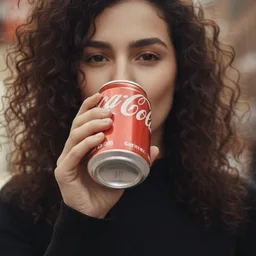
Studio Character Design Reference Sheet

This image presents a polished, studio-grade character design reference sheet for a young woman in a white embroidered peasant blouse, blue jeans, and a red floral headscarf. It feels like a real production document from an animation or game studio clean, organized, and full of carefully considered details.

The prompt works because it locks the character's identity with explicit instructions to preserve facial structure, proportions, and costume details across every view. It also specifies a neutral studio background and orthographic-like framing for the turnaround, ensuring consistency. The inclusion of expression grids, pose studies, and material callouts adds professional depth, while the color palette and proportion guide make the sheet practical for actual production use.

To adapt this, try swapping the character's outfit or palette to match a different genre, or change the aspect ratio to portrait for a vertical character sheet. You can also reduce the number of views for a quicker concept pass.

Create a premium professional character design reference sheet / production model sheet based strictly on the provided reference image.

REFERENCE & IDENTITY LOCK: Use the uploaded reference as the single source of truth for the character's identity. Preserve the exact facial identity, facial structure, hairstyle, hairline, eye shape and color, eyebrows, nose, lips, skin tone, body proportions, physique, age appearance, distinctive features, costume design, accessories, footwear, colors, patterns and all recognizable visual details. Do not redesign, beautify, simplify, age, de-age, or reinterpret the character.

CHARACTER DESIGN ANALYSIS: Before constructing the sheet, internally analyze and lock the character's: facial construction, head-to-body ratio, body proportions, shoulder width and torso structure, limb length and joint placement, silhouette, hairstyle and hair volume, costume construction, accessory placement, color relationships, material characteristics, distinctive identity anchors. All subsequent views must represent the exact same character design.

PAGE FORMAT: Create one sophisticated studio-grade character reference board, landscape 16:9, clean neutral/off-white studio background, refined editorial production-board aesthetic, highly organized hierarchy, generous spacing, subtle technical guide lines, restrained professional typography-style labels where appropriate, no decorative clutter.

01 — HERO CHARACTER PORTRAIT: Place one larger polished head-and-shoulders or three-quarter portrait as the visual identity anchor. Show the character's canonical facial identity clearly with neutral professional expression and accurate hairstyle, skin, costume and accessories.

02 — FULL-BODY TURNAROUND: Create a clearly organized full-body turnaround showing the same character at identical scale and proportions: FRONT VIEW, 3/4 FRONT VIEW, SIDE PROFILE, 3/4 BACK VIEW, BACK VIEW. Use a neutral standing pose with consistent posture and anatomical alignment. Keep head height, eye line, shoulder line, waist, hips, knees and feet consistently aligned across every view. The costume, hairstyle, accessories, seams, patterns, footwear and silhouette must remain identical from every angle.

03 — EXPRESSION STUDY: Include a clean expression grid containing approximately 6 expressions: Neutral, Happy / subtle smile, Serious, Angry / determined, Surprised, Sad / emotional. Maintain the exact same facial identity, head proportions, hairstyle and facial construction in every expression. Expressions should demonstrate believable facial acting rather than exaggerated deformation.

04 — SIGNATURE POSE STUDIES: Include 4–6 full-body pose studies that communicate the character's personality and physical behavior. Use varied but believable poses such as: relaxed standing, confident stance, walking, sitting, interacting with an object, dynamic signature pose. Maintain exact character proportions, costume construction and recognizable silhouette in every pose.

05 — COSTUME & DETAIL CALLOUTS: Add several clean close-up detail panels showing the most important design elements: hairstyle / hair detail, face detail, collar / neckline, sleeves / garment construction, footwear, jewelry or accessories, distinctive emblem / pattern / texture, important prop if present. Show construction and material clearly without turning the sheet into a decorative fashion collage.

06 — MATERIAL STUDIES: Visually communicate the primary materials present in the design: fabric, leather, metal, denim, silk, knit, plastic, glass, jewelry, hair, skin or other relevant materials. Show realistic surface behavior, texture, reflectivity and construction appropriate to each material.

07 — COLOR PALETTE: Include a compact professional color palette strip containing the dominant character colors. Organize colors according to their visual role: skin, hair, primary costume, secondary costume, accent color, accessories / materials. Keep the palette faithful to the reference.

08 — PROPORTION & SILHOUETTE GUIDE: Include a subtle technical proportion guide beside the turnaround. Show: overall height, head-to-body ratio, major horizontal alignment guides, key body proportions, clean silhouette thumbnail. Keep this section understated and production-oriented.

09 — DESIGN CONTINUITY: Treat the entire page as a single canonical character source of truth. Every panel must depict the SAME person/character with: identical facial identity, identical body proportions, identical hairstyle, identical costume, identical accessory placement, identical color palette, identical design language, consistent left/right details. No accidental costume changes, missing accessories, duplicated accessories, altered facial features, changing body proportions, inconsistent hairstyles or unexplained design variations.

VISUAL DIRECTION: High-end professional character design presentation, studio production reference quality, sophisticated concept-art discipline, clean polished rendering, precise construction, controlled neutral lighting, realistic material definition, excellent anatomical consistency, crisp readable details, refined editorial layout, premium art-direction quality. The sheet should feel like an actual professional animation / game / visual-development production document, not a collection of random AI images.

COMPOSITION: Clear information hierarchy, balanced negative space, aligned panels, consistent character scale, clean grid system, logical visual flow, no overlapping figures, no cropped bodies, no confusing perspective, no unnecessary scenery.

CAMERA / VIEW CONTROL: Turnaround views should use consistent orthographic-like framing and neutral perspective. Expression studies should use a consistent head framing. Pose studies may use natural perspective while preserving character proportions.

LIGHTING: Neutral studio illumination designed for design inspection rather than cinematic drama. Soft, even, physically believable light with controlled shadows and accurate material readability.

PHOTOGRAPHIC / RENDER FINISH: Ultra-clean high-end visual development presentation, realistic surface detail, natural skin and hair rendering, physically believable materials, sharp but refined detail, professional production-board finish.

OUTPUT QUALITY: 16K: 15360 × 8640 ≈ 132.7 million pixels, high-resolution professional quality.

NEGATIVE CONSTRAINTS: No character redesign, no identity drift, no inconsistent proportions, no changing face, no changing hairstyle, no costume variations, no missing accessories, no duplicated accessories, no extra limbs, no malformed hands, no distorted anatomy, no random props, no dramatic scenery, no cinematic background, no excessive effects, no clutter, no watermark, no logo, no cropped views.
CR
Camila Rocha@camila_rocha · Jul 20 · Nanobanana
nanobanana prompt: Terminator-Inspired 3D Collectible Art Grid
This AI-generated visual art concept deconstructs the iconic Terminator franchise into a 2x2 grid of high-end cyberpunk dioramas. Each quadrant features a unique 3D resin sculpture representing a spiritual successor: The Matrix with green code fluid, RoboCop with black oil, Aliens with acid slime, and Blade Runner with neon blue rain. The cinematic lighting and subsurface scattering emulate collectible statues from limited-edition lines. #CyberpunkArt #ConceptArt #SciFiCollectibles
[Terminator] (Or any movie/book/anime)<instructions>  System Instruction:   Act as an AI Media Curator and Master Concept Artist. Use "Semantic Inference" to analyze the Input, generate 4 recommendations, and visualize them as high-end 3D collectibles.1. Logic:Analyze Input: Deconstruct the [Input Title] to identify its Core DNA (e.g., Genre, Mood, Visual Style, Themes).Example: If Input is "Terminator," DNA = Cyberpunk, Tech-Noir, Man vs. Machine, Industrial, 80s Action.Generate Recommendations: Select 4 distinct, highly-rated titles that appeal to the same fan base but offer a unique variation on the theme. (Do not just pick sequels; pick spiritual successors or genre pillars).2. Container:Rule: Do not default to a generic inkwell.Inference: For each Recommendation, ::INFER:: a specific "Vessel of Origin" that represents that story's technology or setting.Logic: If Sci-Fi -> A cracked Bio-Hazard Canister or Motherboard. If Fantasy -> An ancient Chalice. If Horror -> A Cursed Urn.Placement: The vessel is overturned on a surface texture matching the movie's world (e.g., Grated Steel, Dusty Pavement, Alien Ship Floor).3. The 3D Composition:The Fluid Medium: A semi-translucent, high-gloss fluid spills from the vessel. The fluid represents the "Essence" of that movie.Logic:Rec 1 (e.g., The Matrix): Fluid = Liquid Green Code.Rec 2 (e.g., RoboCop): Fluid = Black Oil & Motor Fluid.Rec 3 (e.g., Aliens): Fluid = Acid Green Slime.Rec 4 (e.g., Blade Runner): Fluid = Neon Blue Rain/Steam.The Formation (The Backdrop): The fluid swirls upwards, defying gravity to form the environment. It must look like sculpted, translucent resin.Logic: The fluid forms the iconic architecture (e.g., Skyscrapers, Hives, Ruins) behind the hero.The Hero (The Solid): The Main Protagonist bursts out of the fluid surge. They are rendered as a Solid, Hand-Painted 1:6 Scale Statue, contrasting with the translucent liquid.Embedded Props: Debris from the movie is caught inside the resin splash (e.g., Shell casings, origami unicorns, computer chips).4. Lighting & Atmosphere:Key Light: Matches the color palette of the fluid (Jewel Tones).Effect: Subsurface scattering makes the fluid glow from the inside.5. Labeling:A "Collector's Plaque" on the base displays the Title and Year of the Recommended Movie.Output: 2x2 Grid. Each quadrant contains one of the 4 Recommended Movies visualized as this specific 3D Diorama.</instructions>
ER
Ella R.@ella_r · Mar 25 · Nanobanana
nanobanana prompt: Glossy Editorial Concept Art of Sculptural Functional Object
This prompt crafts a high-end editorial photograph that merges Cinematic Lighting with Hyper-realism to showcase a brand's innovative functional object. The scene features a sculptural, AI-invented product, rendered in ultra-premium materials like patinated leather or brushed titanium, with meticulous details such as visible stitching and texture contrasts. Shot on a medium format camera with a shallow depth of field, the lighting uses softbox techniques to envelop the object and accentuate contours against a seamless pastel cyclorama, creating a clean, minimalist composition. The layout includes understated brand and text elements, emphasizing a sleek, professional aesthetic. #ConceptArt #EditorialPhotography #LuxuryDesign #BrandInnovation
[BRAND NAME]: A high-end, glossy concept art magazine editorial photograph of a unique, unexpected functional object conceptualized and designed by the brand.**1. The Concept & Object (AI Invention):**Based on the design philosophy, heritage, and material vocabulary of the specified brand, the AI must invent a novel utility product (NOT standard clothing, shoes, or bags). Examples could be home goods, tech accessories, tools, or sporting equipment, reinterpretated through the brand's lens. The object should feel sculptural yet functional.**2. Materials & Details (Hyper-Premium):**The object is constructed from ultra-premium, highly tactile materials characteristic of the brand (e.g., patinated exotic leathers, brushed aerospace-grade titanium, sculpted matte ceramics, molded carbon fiber, or technical high-fashion textiles). Every detail is hyper-realistic: visible stitching, microscopic material grain, precision engravings, and complex texture contrasts.**3. Photography & Lighting (Cinematic Studio):**Shot on a medium format Phase One camera with a 100mm macro lens. Extremely shallow depth of field, with sharp focus on the hero details of the object and a creamy, smooth bokeh background. The lighting is sophisticated studio softbox lighting: gentle, enveloping fill light with precise rim lighting to accentuate contours and material textures.**4. Environment:**A seamless, impeccably clean studio cyclorama background in a pure, ultra-light pastel tone (e.g., desaturated mint, pale blush, or off-white), free of shadows.**5. Layout & UI Elements (Strict Placement):**- **Bottom Right Corner:** A small, understated, monochrome gray logo of the brand.- **Bottom Left Corner:** Small, minimalist monochrome gray text describing the invented product. The font style looks like Manrope Regular with very tight tracking (kerning) and balanced line spacing. Example format: "CONCEPT STUDY: [AI inserts invented product name]. MATERIAL: [AI inserts main materials]. SS25.
Chloe H.@chloe_h · Mar 23 · Nanobanana
nanobanana prompt: Glossy Editorial Concept Art of a Sculptural Functional Object
This prompt crafts a high-end editorial photograph that merges Cinematic Lighting with Hyper-realism to showcase a brand's innovative design. The scene features an AI-invented functional object, rendered in ultra-premium materials like patinated leather or brushed titanium, captured with a medium format camera and shallow depth of field to emphasize intricate details. Set against a seamless pastel cyclorama, the composition uses sophisticated softbox lighting to create gentle fill and precise rim effects, highlighting textures and contours. The layout includes minimalist UI elements, such as a monochrome brand logo and descriptive text, ensuring a clean, professional aesthetic that evokes luxury and creativity. #ConceptArt #EditorialPhotography #LuxuryDesign #BrandInnovation
[BRAND NAME]: A high-end, glossy concept art magazine editorial photograph of a unique, unexpected functional object conceptualized and designed by the brand.**1. The Concept & Object (AI Invention):**Based on the design philosophy, heritage, and material vocabulary of the specified brand, the AI must invent a novel utility product (NOT standard clothing, shoes, or bags). Examples could be home goods, tech accessories, tools, or sporting equipment, reinterpretated through the brand's lens. The object should feel sculptural yet functional.**2. Materials & Details (Hyper-Premium):**The object is constructed from ultra-premium, highly tactile materials characteristic of the brand (e.g., patinated exotic leathers, brushed aerospace-grade titanium, sculpted matte ceramics, molded carbon fiber, or technical high-fashion textiles). Every detail is hyper-realistic: visible stitching, microscopic material grain, precision engravings, and complex texture contrasts.**3. Photography & Lighting (Cinematic Studio):**Shot on a medium format Phase One camera with a 100mm macro lens. Extremely shallow depth of field, with sharp focus on the hero details of the object and a creamy, smooth bokeh background. The lighting is sophisticated studio softbox lighting: gentle, enveloping fill light with precise rim lighting to accentuate contours and material textures.**4. Environment:**A seamless, impeccably clean studio cyclorama background in a pure, ultra-light pastel tone (e.g., desaturated mint, pale blush, or off-white), free of shadows.**5. Layout & UI Elements (Strict Placement):**- **Bottom Right Corner:** A small, understated, monochrome gray logo of the brand.- **Bottom Left Corner:** Small, minimalist monochrome gray text describing the invented product. The font style looks like Manrope Regular with very tight tracking (kerning) and balanced line spacing. Example format: "CONCEPT STUDY: [AI inserts invented product name]. MATERIAL: [AI inserts main materials]. SS25.

That is the free preview

Create an account to keep scrolling, like and save prompts, follow the creators you like, and share your own.