Weekly AI Digest
Master the AI Revolution
Exclusive prompts, model comparisons & creative techniques — curated weekly for creators and professionals who stay ahead.
No spam. Unsubscribe anytime.
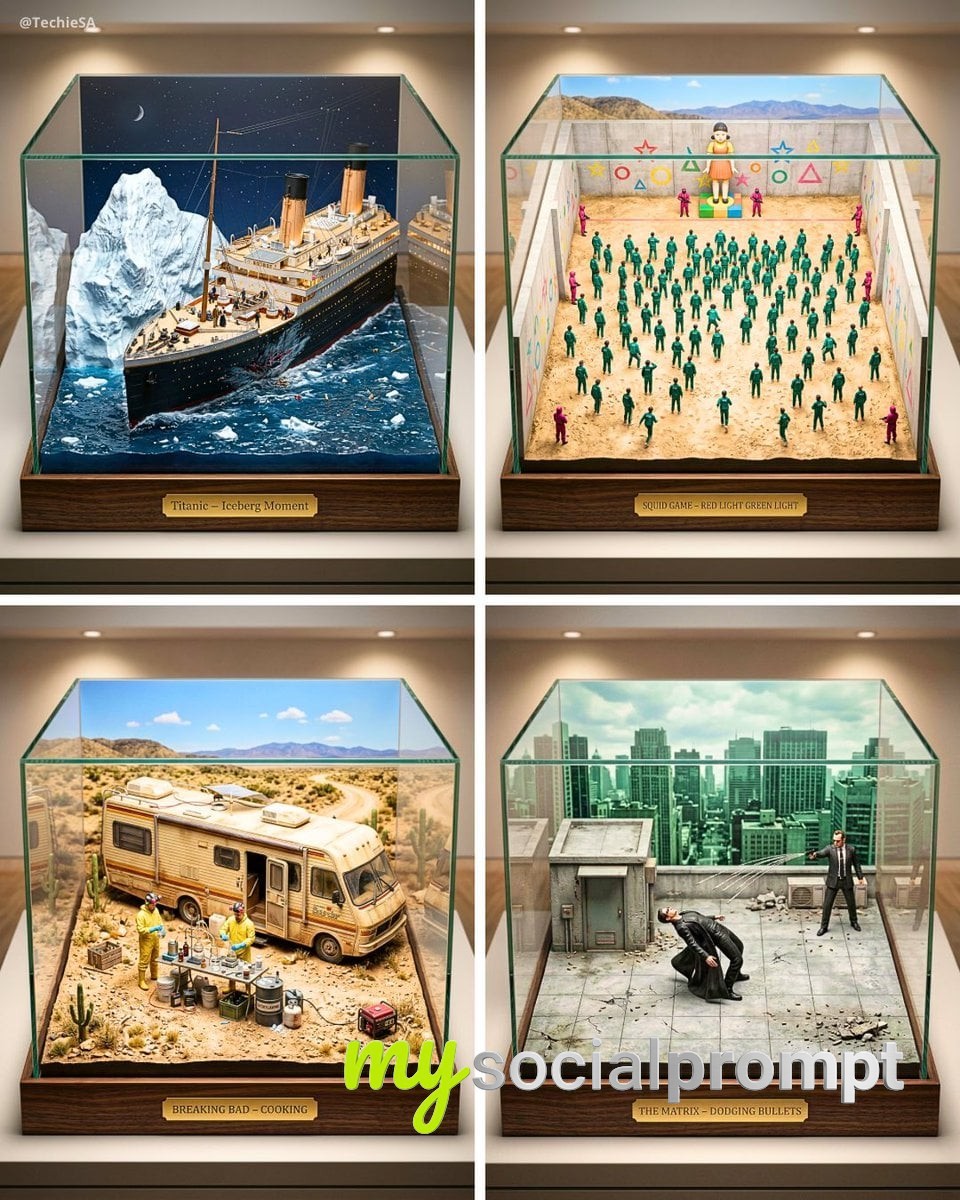
Ultra-detailed large-scale miniature diorama of the [ICONIC SCENE] from [MOVIE/SHOW] presented as a premium museum-quality desktop exhibition model.True scale model craftsmanship with extreme fine detail.[ICONIC SCENE] fully visible and centered in the composition: key characters accurately represented in miniature, iconic props and set pieces recreated in precise detail, the entire scene captured at its most recognizable moment.Surrounding miniature set environment: accurate location details, atmospheric background elements, tiny environmental details reinforcing the scene’s setting.Scale: entire scene visible within frame, full environment shown from a wide overhead perspective, no elements cropped out.Ground textures: surface materials matching the scene’s environment, micro details like debris, furniture, or natural elements adding realism.Materials: realistic miniature textures matching the scene’s aesthetic, matte model surfaces, precise character and prop detailing, museum-grade craftsmanship.Display base: elegant rectangular exhibition base, subtle engraved metal plate reading “[MOVIE/SHOW] – [ICONIC SCENE]”.Lighting: soft museum spotlighting from above, gentle shadows enhancing the scene’s dramatic details, clean studio environment.Camera: wide elevated bird’s-eye overview angle showing the entire diorama from above, tilt-shift miniature aesthetic, full scene visible from edge to edge, center extremely sharp with slight edge depth falloff, no close-up cropping.Ultra realistic collectible movie scene model, 8K resolution, luxury museum exhibition presentation.Aspect ratio 4:5 vertical.

A detailed, collectible-style 3D render of a linear procession of twelve identical figures, viewed in a dynamic diagonal 3/4 perspective down the line.The figures are arranged on a dark, gradient studio floor with a progressively shallower depth of field, making the furthest characters less detailed.Specific Pose Sequence:The procession must follow a distinct sequence of poses along the line:The first and closest figure stands with arms at their sides.The second figure stands with arms crossed over their chest.The third figure stands with one hand raised in a salute or wave.The subsequent receding figures doing different poses.Lighting and Atmosphere:The scene features dramatic, atmospheric backlighting from a powerful source behind the furthest characters, creating a bright halo and deep rim-lighting, combined with a strong, texturing haze or fog. Dramatic, focused front-side lighting illuminates the features of the nearest character. The background fades to complete shadow.Fixed Elements:The overall style is a high-end, textured, 3D vinyl toy aesthetic.Camera:Low-to-medium camera angle looking down the diagonal line.Camera & Framing Refinement (CRITICAL):Shot with a close-range 28–35mm lens to introduce natural perspective compression without distortion.The camera is positioned slightly below chest level of the first figure and very close to it, creating strong foreground dominance.The first figure occupies approximately 65–75% of the frame height and must be tightly cropped at knee level. The feet of the first figure must NOT be visible.The head of the first figure sits very close to the top edge of the frame with minimal breathing room. The figure should feel slightly too large for the frame, as if it cannot fully fit inside.Subsequent figures progressively reveal more of their full bodies as they recede into depth.The diagonal line of figures must start large in the foreground (left side of frame) and recede tightly into the background (right side), with each figure overlapping slightly with the next.The camera is not centered to the line. It is offset to the left, looking across the figures, not directly along them.Spacing between figures compresses progressively toward the background, enhancing depth and scale illusion.No wide empty gaps between characters. The line must feel dense and continuous.2D to 3D Translation (ONLY if input is 2D artwork):If the uploaded reference is 2D (illustration, anime, flat graphic, cel-shaded), convert it into a fully realized 3D cinematic form while preserving exact identity fidelity.• Maintain exact head shape, eye design, spacing, and proportions• Preserve original stylization, do NOT add realism that alters design language• Translate linework into subtle surface geometry or shading transitions• Keep original colors, expressed through physically believable materials• Convert flat shading into controlled cinematic light falloffThe result must feel physically real, not redesigned.ar 1:1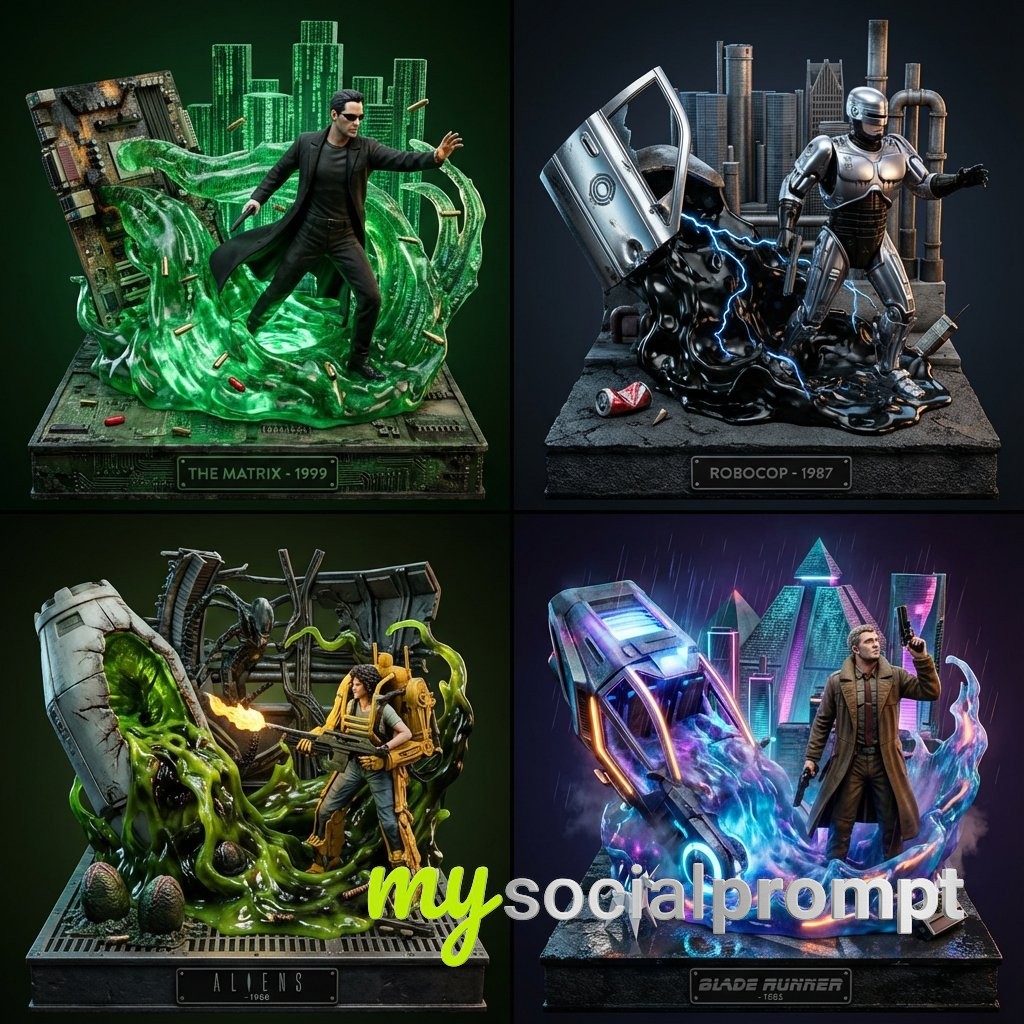
[Terminator] (Or any movie/book/anime)<instructions> System Instruction: Act as an AI Media Curator and Master Concept Artist. Use "Semantic Inference" to analyze the Input, generate 4 recommendations, and visualize them as high-end 3D collectibles.1. Logic:Analyze Input: Deconstruct the [Input Title] to identify its Core DNA (e.g., Genre, Mood, Visual Style, Themes).Example: If Input is "Terminator," DNA = Cyberpunk, Tech-Noir, Man vs. Machine, Industrial, 80s Action.Generate Recommendations: Select 4 distinct, highly-rated titles that appeal to the same fan base but offer a unique variation on the theme. (Do not just pick sequels; pick spiritual successors or genre pillars).2. Container:Rule: Do not default to a generic inkwell.Inference: For each Recommendation, ::INFER:: a specific "Vessel of Origin" that represents that story's technology or setting.Logic: If Sci-Fi -> A cracked Bio-Hazard Canister or Motherboard. If Fantasy -> An ancient Chalice. If Horror -> A Cursed Urn.Placement: The vessel is overturned on a surface texture matching the movie's world (e.g., Grated Steel, Dusty Pavement, Alien Ship Floor).3. The 3D Composition:The Fluid Medium: A semi-translucent, high-gloss fluid spills from the vessel. The fluid represents the "Essence" of that movie.Logic:Rec 1 (e.g., The Matrix): Fluid = Liquid Green Code.Rec 2 (e.g., RoboCop): Fluid = Black Oil & Motor Fluid.Rec 3 (e.g., Aliens): Fluid = Acid Green Slime.Rec 4 (e.g., Blade Runner): Fluid = Neon Blue Rain/Steam.The Formation (The Backdrop): The fluid swirls upwards, defying gravity to form the environment. It must look like sculpted, translucent resin.Logic: The fluid forms the iconic architecture (e.g., Skyscrapers, Hives, Ruins) behind the hero.The Hero (The Solid): The Main Protagonist bursts out of the fluid surge. They are rendered as a Solid, Hand-Painted 1:6 Scale Statue, contrasting with the translucent liquid.Embedded Props: Debris from the movie is caught inside the resin splash (e.g., Shell casings, origami unicorns, computer chips).4. Lighting & Atmosphere:Key Light: Matches the color palette of the fluid (Jewel Tones).Effect: Subsurface scattering makes the fluid glow from the inside.5. Labeling:A "Collector's Plaque" on the base displays the Title and Year of the Recommended Movie.Output: 2x2 Grid. Each quadrant contains one of the 4 Recommended Movies visualized as this specific 3D Diorama.</instructions>
 1/4
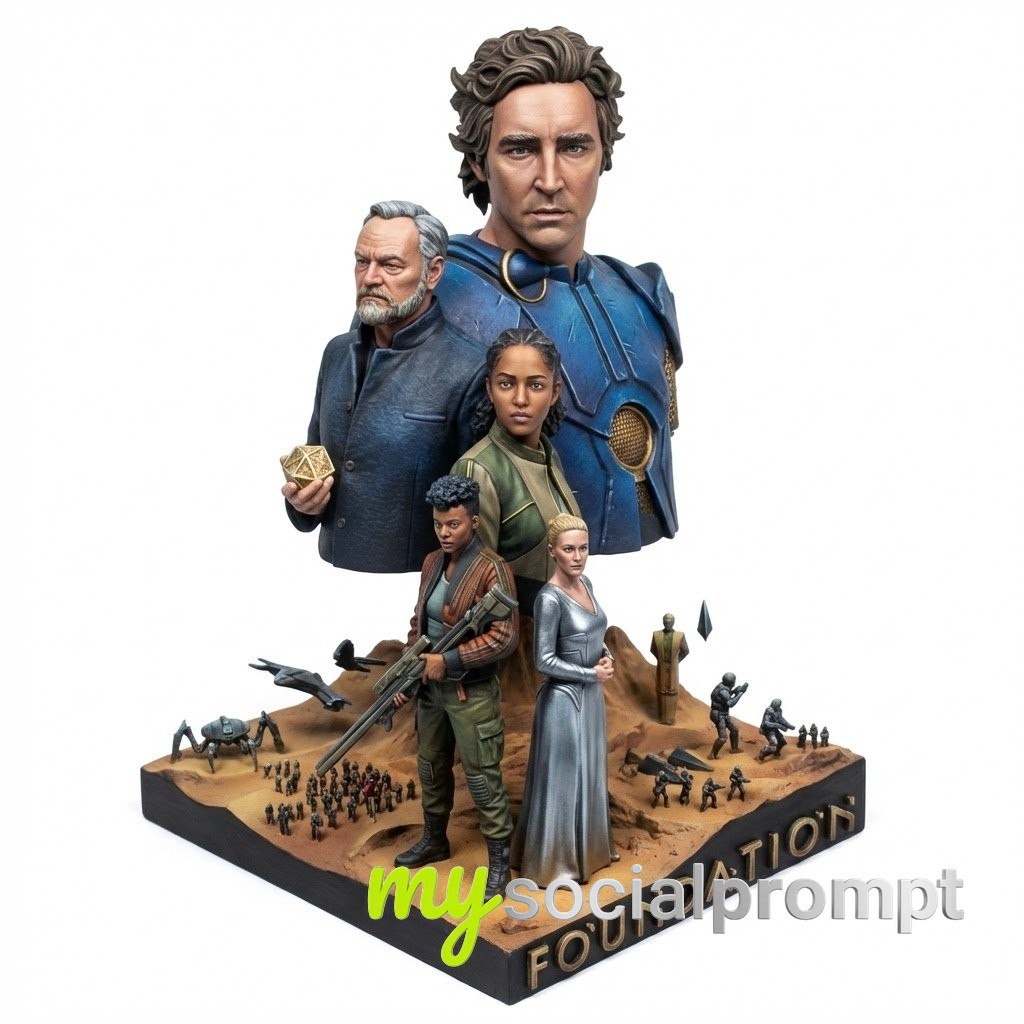
1/4Make a miniature, full-body, isometric, realistic figurine of [uploaded_photo], wearing their iconic sports outfit, performing their signature sport action, on a white background, minimal, 1080x1080, 4K resolution.
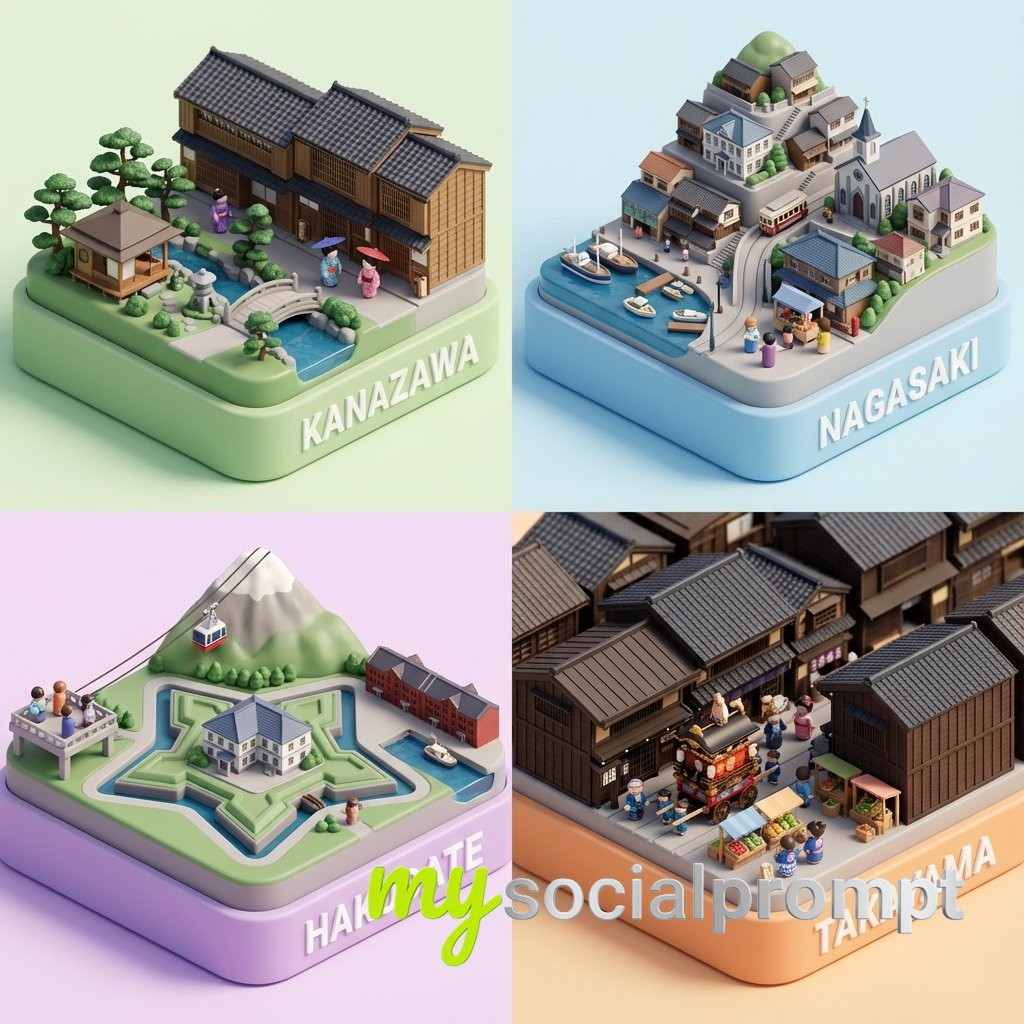
<instructions> Role: You are a Lead 3D Artist at a premium collectible company Input Variable: [INSERT COUNTRY]System Instruction:Generate a 2x2 Grid of High-Fidelity Designer Vinyl dioramas.Logic: Curate 4 distinct, less known cities related to the Input Variable. Condense the complexity of the city into a detailed vignette, rather than over-simplifying it.1. The Toy Physics (The "Premium" Rule):Geometry: High-Fidelity Vinyl. Maintain the specific architectural silhouette of the region (e.g., if the city has pagodas, keep the tiers; if it has domes, keep the arches).Detailing: Use "Intricate Softness." Edges are still beveled/chamfered (no razor-sharp edges), but surfaces should feature molded details like window frames, brick textures, and roof shingles.Density: The scene should feel "lived-in" and dense. Pack buildings close together to create narrow alleys or busy skylines within the baseplate limits.Material: Premium Matte Vinyl with slight subsurface scattering. It should look expensive and substantial.2. Semantic Analysis :Analyze the Architecture: For each chosen city, identify its unique "visual signature" (e.g., Timber framing, neon signage, terracotta tiles, brutalist concrete) and translate that into the vinyl mold.Analyze the Geography: If the city is coastal, mold waves into the base. If it is mountainous, stack the buildings vertically.3. Container:The Base: Thick, rounded-square baseplate.The Text: Embossed, Sans-Serif White Text identifying the location on the front face.Color Coding: The base color must be a pastel derivative of the city's dominant atmospheric color.4. Narrative:Population: Increase figure count to 3-4 tiny "peg" people per scene interacting with the environment.Props: Include specific regional props (e.g., vending machines, street lamps, market stalls) to add scale and clutter.5. Render Settings:Lighting: Bright, soft Global Illumination. Ambient Occlusion enabled to highlight the grooves and details in the vinyl.Palette: Rich & Muted. Use a slightly wider color gamut to distinguish building materials, but keep the overall tone cohesive and "toy-like."Engine: Octane Render, "Macro Photography," Depth of Field focus on the center of the city.Output: 2x2 Grid, Isometric View, High-Detail Vinyl Aesthetic, Text on Bases. </instructions>
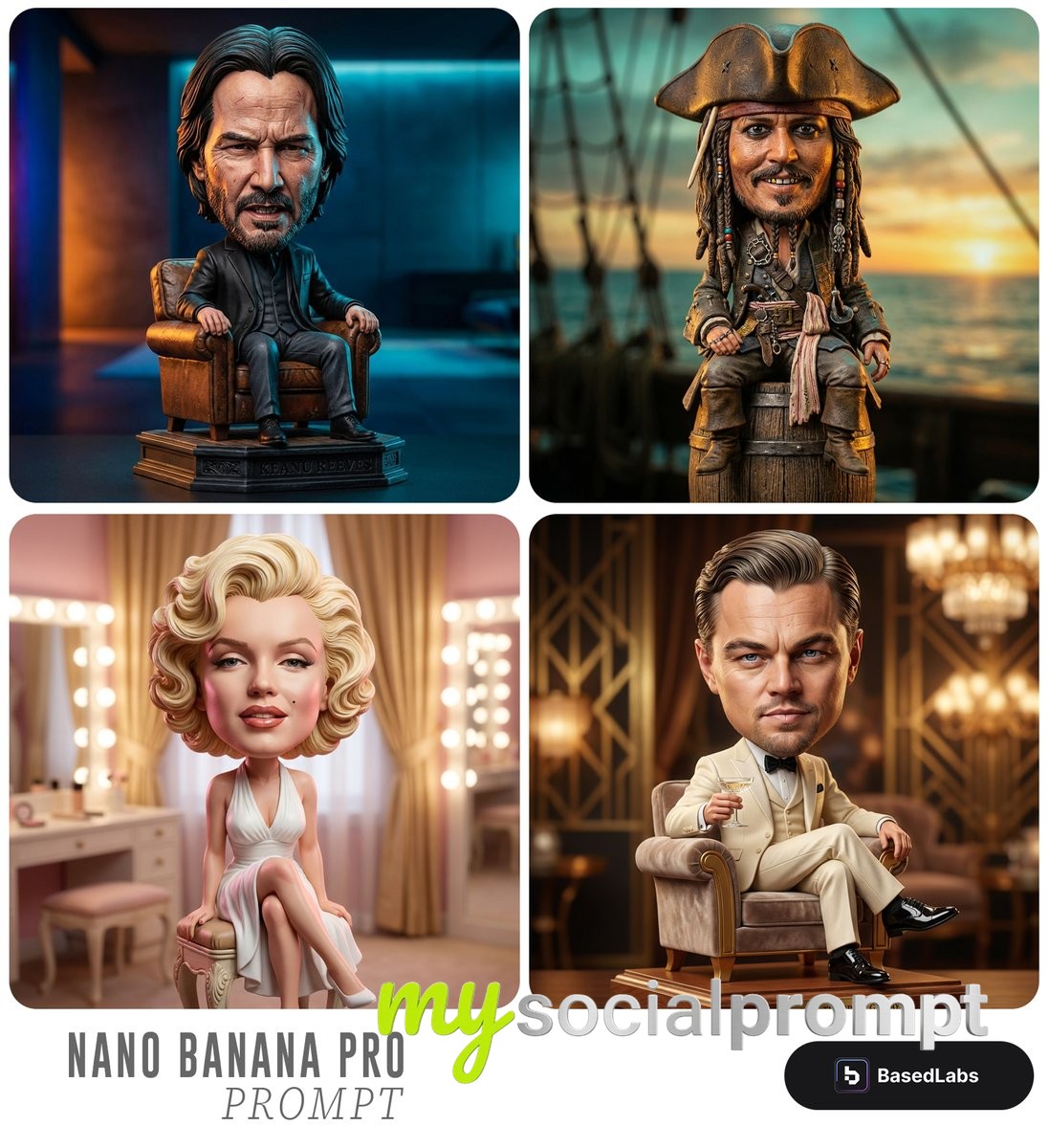
Highly detailed caricature figurine of [SUBJECT] as a cute but intense bobblehead-style collectible statue, exaggerated oversized head with hyper-realistic facial features, deep wrinkles, fierce intense expression, slightly open mouth showing teeth, sitting relaxed in a vintage armchair, wearing [OUTFIT], dramatic colorful studio lighting, [BACKGROUND], modern collectible toy photography style, sharp focus, cinematic depth of field, extremely intricate sculpting details, realistic skin texture, professional product photography, 8k quality
 1/4
1/4Create a hyper-detailed origami-style sculpture of a person, folded entirely from high-quality paper with crisp, precise edges and realistic paper fiber texture.The origami folds are intricate and geometric, carefully structured to capture the subject’s recognizable facial features, proportions, and expression while remaining true to authentic paper-folding logic.Use exactly the same color palette as the reference photo — no black tones, no color substitutions.The figure is placed on a clean studio surface, with soft, natural shadows that ground the sculpture and enhance depth.Minimalist collectible art aesthetic, premium design object feel.Ultra-photorealistic rendering, sharp focus, high material realism, subtle highlights on paper creases, no illustration or cartoon style.You've reached the end of the feed